
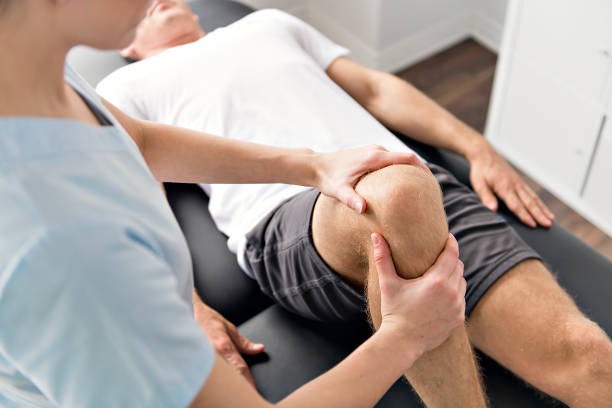
Some people foam-roll every morning. Others hold a hamstring stretch before every run. And yet plenty of them still walk around with hips that feel welded shut and a lower back that clicks when they bend over. If that sounds familiar, the problem usually isn’t effort. It’s the ceiling that solo stretching runs into — a ceiling that assisted stretching is specifically built to get past.
The Hidden Limit of Stretching by Yourself
Here’s something most people never think about: your body doesn’t let you stretch as far as it physically could. When you pull your own leg toward your chest or reach for your toes, a protective reflex kicks in. Your nervous system senses the effort and tightens the muscle to guard against injury, capping your range of motion well before you hit your actual physical limit.
That reflex is useful — it’s part of why you don’t tear something every time you bend down to tie your shoes. But it also means that no matter how consistently you stretch on your own, there’s a ceiling you can’t stretch past by yourself, no matter how flexible you eventually get.
Assisted stretching works differently because someone else is doing the moving. Since your muscles aren’t actively working to create the stretch, that protective guarding relaxes, and a trained coach can guide your body through a deeper range of motion than you could reach solo — safely, and with actual feedback on how you’re responding.
Same Muscles, Very Different Results
It’s not that solo stretches and assisted stretches target different things. A hip flexor stretch is a hip flexor stretch either way. What changes is precision and depth.
When you stretch alone, you’re working from memory and general feel — the same routine, roughly the same angle, regardless of what’s actually tight that day. A coach doing assisted stretching can feel exactly where the resistance is, adjust the angle in real time, and shift focus session to session based on how your body is actually responding, not on a fixed script.
That’s the difference between “doing stretches” and having a personalized stretching program one built around your specific tightness, movement patterns, and goals rather than a routine pulled from a fitness app.
Where Personalization Actually Changes the Outcome
A generic stretch routine treats a marathon runner and a software developer who sits ten hours a day the same way. That doesn’t make much sense once you think about it — their bodies are tight in completely different places, for completely different reasons.
A personalized approach starts by looking at:
- What your daily life demands of your body. Long hours at a desk create different tightness than long hours on your feet or behind a steering wheel.
- What you’re actually trying to fix. Wanting to swing a golf club without wincing is a different goal than wanting to sit cross-legged on the floor with your kids again.
- Anything your body is working around. A previous injury, a joint replacement, or a chronic condition changes how far and how fast a stretch should go — and a good coach adjusts for that instead of ignoring it.
- How your body changes over time. Flexibility shifts with activity level, stress, and even the seasons. A program that stays useful adapts instead of repeating the same session indefinitely.
None of that shows up in a one-size-fits-all stretching routine. It only shows up when someone is actually paying attention to your body, session after session.

What to Expect if You Try It
Nervous about a first session? The process is more relaxed than people expect.
- You lie down, fully clothed, in something comfortable to move in.
- You talk before you stretch. A good coach asks what feels tight, what your goals are, and about anything they should know — old injuries, surgeries, areas to go easy on.
- They move your body through targeted stretches. You stay passive; they guide the motion and adjust based on your feedback.
- You speak up the whole time. If something feels too intense, that’s information the coach uses immediately, not something you push through.
- You leave and notice it right away. Most people feel a difference the moment they stand up — looser joints, less tension, easier movement.
Does This Mean You Should Stop Stretching on Your Own?
Not at all. Solo stretching is still a good habit between sessions — it maintains what an assisted session builds. Think of it less as a replacement and more like the difference between doing your own home workouts and working with a trainer occasionally to make sure your form and program are actually dialed in.
The two work together. Daily stretching maintains. Assisted stretching, done as part of a personalized program, is what actually moves the needle on stubborn tightness that hasn’t budged in years.